
Services
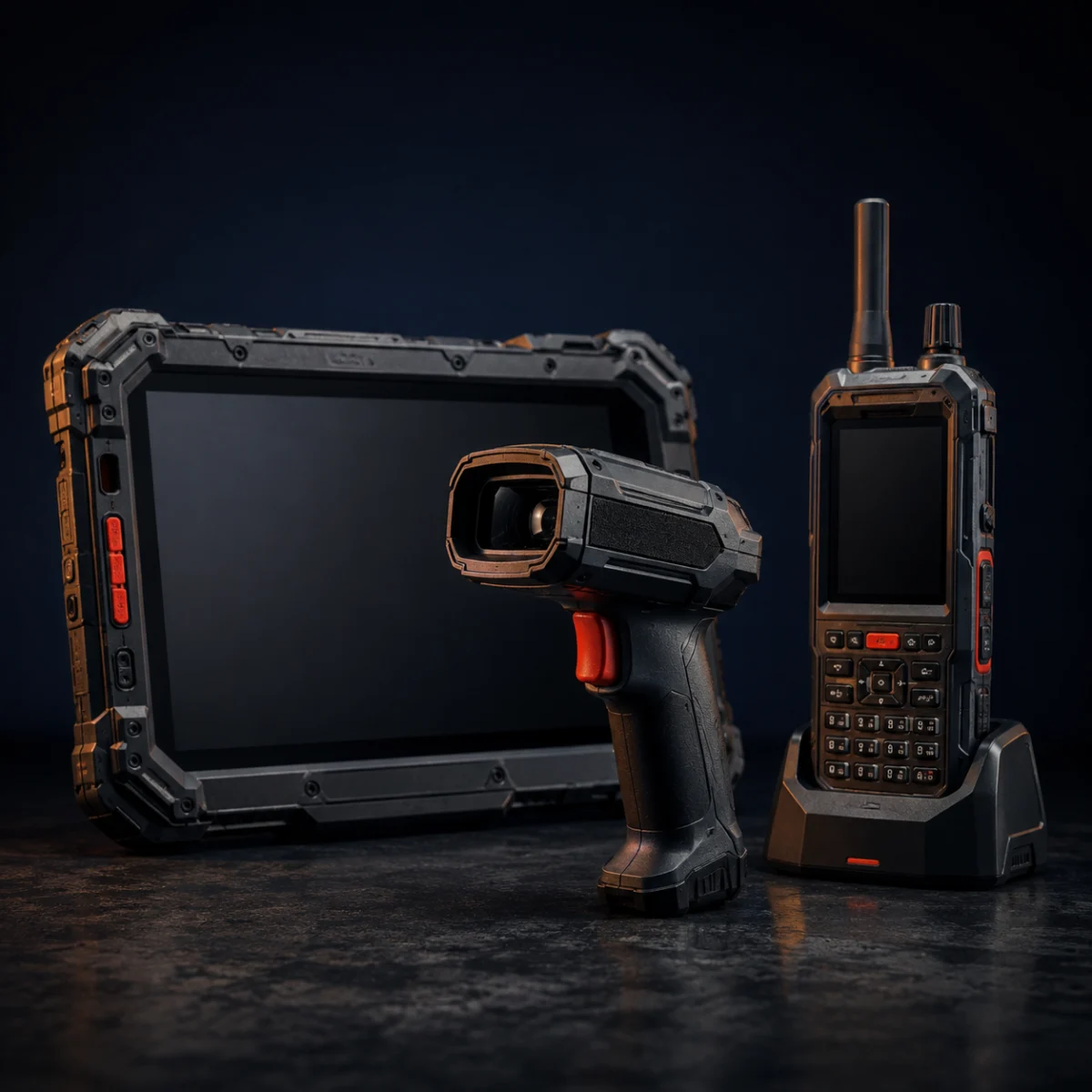
Rugged industrial smartphones
Intrinsically safe rugged smartphones and tablets for teams working inside classified hazardous areas, specified against the zone they will actually be carried into.
A rugged handset gets bought twice when it is bought from the specification sheet alone. The headline figures, IP68, IP69K, drop height, are the easy part. What decides whether the device can be carried into the area at all is the certificate, and the certificate has to cover the zone, the gas group and the temperature class of the place it is going.
We supply Conquest rugged handsets and tablets with removable high capacity batteries, which is the difference between a device that lasts a full shift and one that lasts half of it. Depending on the model they can be specified with multi gas detection, thermal imaging, 1D and 2D scanning and DMR walkie talkie built in, so one device on the belt replaces several.
The ambient range is the detail missed most often. Many certificates state 20 to 40 degrees C, Qatari summers exceed that, and equipment run outside its certified ambient is outside its certification. We ask for the extended range explicitly.
What this covers
- Intrinsically safe smartphones and tablets for classified areas
- Certification matched to the zone, gas group and temperature class
- Devices rated IP68 and IP69K with removable high capacity batteries
- Multi gas detection, thermal imaging and 1D and 2D scanning options
- DMR walkie talkie models where site radio is part of the job
- Help choosing between variants before the order is placed
What shapes this work
Rugged and intrinsically safe are not the same claim
Rugged describes how much physical abuse a device survives. Intrinsically safe describes whether it may enter an atmosphere where a spark would ignite something. A device can be extremely rugged and still not be permitted in your area.
The ambient range is where certificates run out
A certificate that stops at 40 degrees C does not cover a Qatari summer, and equipment used outside its certified ambient is outside its certification. The extended range has to be asked for by name.
Battery strategy decides the shift
A sealed battery turns into a charging problem across a crew. Removable high capacity batteries mean a spare in the pocket rather than a device off the job.
Questions buyers ask about this
What is the difference between rugged and intrinsically safe?
Rugged is about surviving drops, dust and water. Intrinsically safe is about being allowed into a classified atmosphere in the first place. The second is a certification question, and it is the one that stops a device at the gate.
What do you need to know before quoting a device?
The zone, the gas group and the temperature class of the area it will be used in, plus the ambient temperature range on site. Those four decide which models are even eligible, before anything else is discussed.
Can these devices replace the site radio?
Some models carry DMR walkie talkie alongside the phone, which is how one device ends up replacing two on the belt. Tell us whether site radio is part of the requirement and it narrows the list quickly.
The other services we offer
Industrial procurement
End to end supply chain solutions for spare parts and equipment, sourced against your specification rather than against a description.
Read moreWire rope installation
Installation and calibration of wire rope systems, carried out on site by trained technicians.
Read moreSpark arrestors
High grade steel spark arrestors for diesel engines operating in hazardous area classifications.
Read moreTower and EOT crane services
Erection and dismantling of tower cranes, plus supply of EOT crane parts and accessories.
Read moreTechnical support
Specification assistance before you order and responsive support after delivery.
Read more